Only in Israel could I — or any other Jew — begin the day in a church and end it in a mosque.
I attended the annual Ahmadiyya conference. It’s not the first time I’ve been to their cultural center. I’ve built my impressions over time, listening and learning…
The Ahmadiyya Muslims are a reformist Islamic movement founded in India in the late 19th century. After the 1947 partition, their headquarters moved to Pakistan. Facing persecution there, they eventually shifted their base to London. In the Middle East, however, their center is in Haifa, Israel — where, unlike in Muslim-majority countries, they are free to practice their faith.
Ahmadis believe that their founder, Mirza Ghulam Ahmad, was both a prophet and a reformer — not the founder of a new religion, but a reviver of Islam. This directly contradicts mainstream Islamic belief that Muhammad is the final prophet, earning Ahmadis the label of “unbelievers” in the eyes of most Muslims.
The Haifa Ahmadiyya community is small — only a few hundred families — yet it is respected for promoting peaceful coexistence. Their mosque, built in the 1930s and expanded in the 1980s, is large and striking. More than a place of prayer, it serves as a cultural hub, hosting interfaith gatherings and community events. Their activities are also broadcast on MTA 3 Al-Arabiyya, their Arabic-language satellite channel, which spreads their teachings across the Arab world.
Interestingly, their outreach is directed not only toward Muslims but also toward local Jews — and what better way to win hearts and minds than through warmth, hospitality, and dignified conversation?
Once a year, they host a major conference to introduce the public to their faith and strengthen their community’s image. They open their doors wide, inviting leaders of all religions, distributing literature in multiple languages, and answering questions.
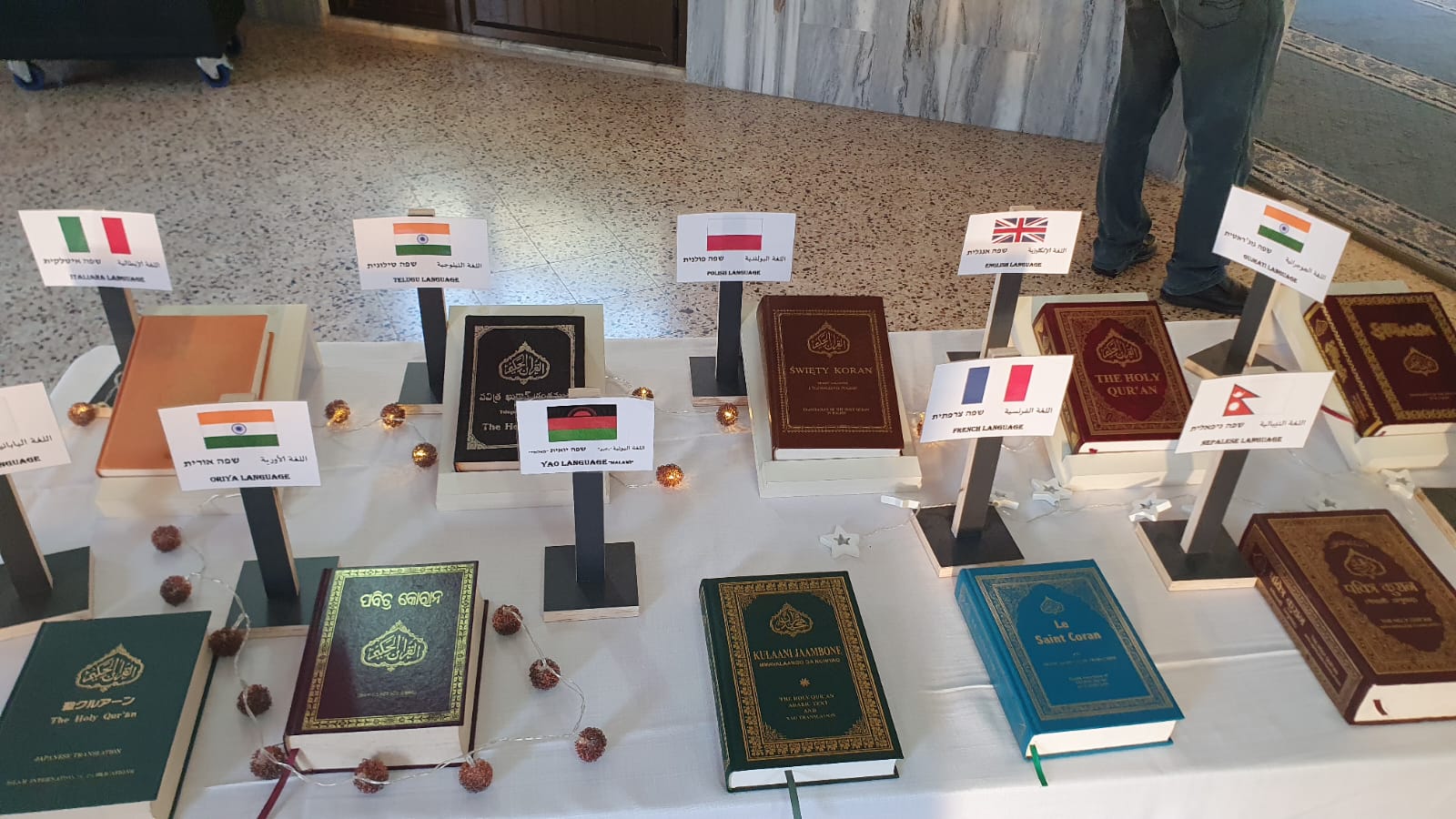
There are panel discussions and, true to Middle Eastern tradition, food.
Most people stop at their well-known motto — “Love for All, Hatred for None.” For Israelis desperate to live in peace with Muslim neighbors, it feels like a relief to discover Muslims who firmly reject violent jihad. That joy makes it easy to overlook what is left unsaid: that the Ahmadiyya are rejected by the Muslim majority, and that while they renounce violence, they do not renounce jihad itself — only redefining it as a peaceful struggle to spread Islam.
Thus the smiles and hospitality. Behind them lies a consistent framing: their faith presented as the solution to all problems, while Jews are subtly — and sometimes not so subtly — cast as extremists, unkind to Arab neighbors. On their stage, the war to remove the threat from Gaza is condemned as an atrocity, a crime against humanity. The “real solution,” they suggest, is Palestine — though cleverly, it is usually not the Ahmadis themselves who say the most extreme things, but Jews they invite to speak on their stage.
I believe in listening to everyone, taking the good where it can be found. There is a lot of good to be discovered! At the same time, I also believe it is vital to listen carefully — to truly understand who people are, what they believe, and what they want. I have learned that it is both very common and very dangerous to project onto others the intentions we wish they had, instead of seeing them as they truly are.
If you appreciate my writings and would like to support my efforts, please consider a PayPal donation to help me bring Inspiration from Zion to people around the world.
 Inspiration from Zion: This is a Love Story